Excimer Laser
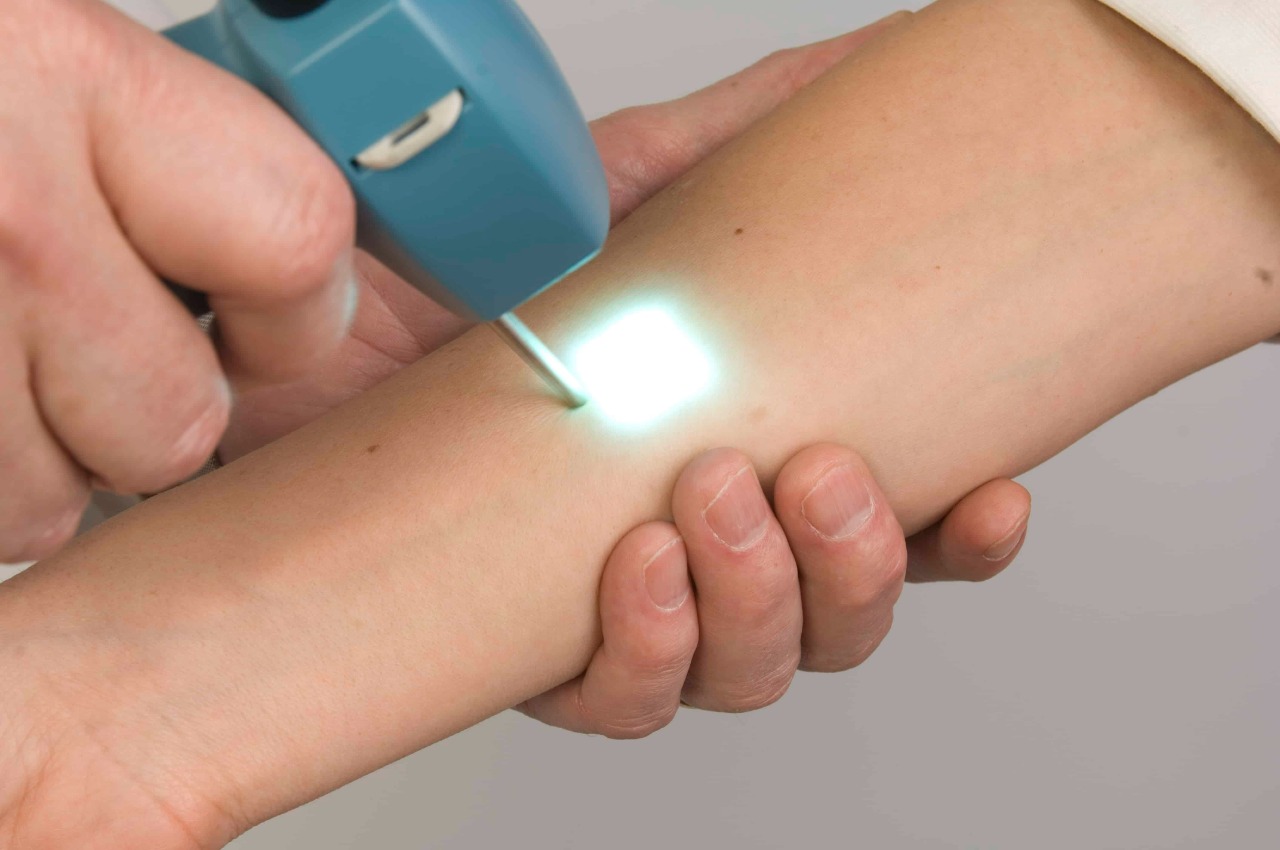
The 308 Excimer system is a handheld system for intense monochromatic UVB therapy, treating autoimmune diseases of the skin such as psoriasis and vitiligo.
The aim of this systematic review was to investigate the literature and summarize all experiments, clinical trials, and case reports on 308-nm excimer laser in dermatological disorders.
Using a 308nm wavelength which replicates the wavelength of the excimer laser, Excimer 308 allows you to treat patients quickly and effectively with the benefits of a lighter-weight system that offers greater flexibility, lower investment costs, no consumables and greater ease of use
Excimer laser in which “excimer” is a terminological reference to “excited dimer”, composed of noble gas and halide which repel each other, has turned into a prevalent mode of action in confronting numerous skin disorders. Of these ultraviolet B rays which comprise beams of varied wavelengths, the 308nm xenon-chloride is the most practical in dermatology.
The advantages of monochromatic excimer laser over phototherapies of other kinds have been depicted as lower UV dose exposure, shorter course of therapy and for the most part, the possibility of being directed at distinct sites of skin rather than compromising the adjacent normal skin. The aim of this overview of excimer laser was to summarize all reported uses of this kind of laser in different dermatologic diseases.
Vitiligo
Vitiligo is an acquired depigmentary disorder characterized by white areas on the skin due to loss of functional melanocytes. Medium doses of the 308-nm excimer laser has proved to be effective in the treatment of limited vitiligo, however, the rate and speed of repigmentation is highly associated with the site and duration of disease as the face and neck (UV sensitive areas) are the highly respondent areas along with an earlier resolution of the lesions while the joints and extremities (UV resistant areas) exhibit the slightest response to therapy. Also, the shorter disease course is more promising in the treatment results. Additionally, trials have demonstrated further efficacy of treatment in Fitzpatrick skin types other than I and II Combination therapy of the 308-nm excimer laser and calcineurin inhibitors, topical tacrolimus in particular, is regarded to be more beneficial than excimer laser alone as well as combination therapy with topical tacalcitol. On the other hand, simultaneous use of topical calcipotriol has not indicated superior outcomes. It has also demonstrated efficacy in treating childhood vitiligo which is evidently intensified at simultaneous use of topical pimecrolimus. Being compared to narrow-band UVB phototherapy (311- 313 nm), 308-nm excimer laser seems to augment and expedite the repigmentation process. Treatment outcomes of the 308-nm excimer lamp was akin to that of the 308-nm excimer laser.
Psoriasis
Psoriasis is a common, chronic, disfiguring inflammatory and proliferative disorder of the skin. Notable abrogation of psoriasis plaques has been noted even following the first session of excimer laser phototherapy which also sustains subsequent to treatment tapering . It has shown to be efficacious in the management of psoriasis vulgaris, scalp and palmoplantar psoriasis and child psoriasis as well. Being administered with other modes of phototherapy (PUVA: psoralen UVA) or topical treatments (flumetasone, dithranol, calcipotriol; each applied in combination therapy individually), 308-nm excimer laser exhibited higher efficacy than monotherapy. The 308-nm excimer lamp and the 308-nm excimer laser did not indicate any considerable differences in terms of efficacy.
Atopic dermatitis
Atopic dermatitis is a chronic relapsing skin disease characterized by xerosis and pruritus. 308-nm excimer laser should be considered as a beneficial treatment modality in localized atopic dermatitis both in adults and childre. It also appears to be more effective than clobetasol propionate in overcoming prurigo form of atopic dermatitis.
Alopecia areata
Both 308-nm excimer lamp and 308-nm excimer laser provoke regrowth of hair in patchy alopecia areata in children and adults, with the utmost effect on the scalp lesions in spite of no detectable changes in the lesions of extremities.
Allergic rhinitis
Regarding the immunosuppressive aspect of phototherapy, 308-nm excimer laser was appraised in the treatment of allergic rhinitis which evidently diminished the hypersensitivity symptoms such as rhinorrhea, sneezing and total nasal score
Folliculitis
Substantial improvement was detected following sessions of 308-nm excimer laser therapy in refractory folliculitis
Granuloma annulare
In a case report presenting a 73-year old female with long-standing granuloma annulare, thorough clearance of the lesions was obtained after undergoing sessions of 308-nm excimer laser therapy
Lichen planus
Lichen planus is an inflammatory papulosquamous disorder of the skin. Significant resolution of erosive oral lichen planus was achieved on account of low-dose 308-nm excimer laser treatment.
Mycosis fungoides
Receiving 308-nm excimer laser as a mode of therapy has shown promising results in early-stage localized mycosis fungoides. Moreover, combination therapy of 308-nm excimer laser, psoralen ultraviolet A (PUVA) and oral bexarotene has set the stage for considerable remission of mycosis fungoides plaques in a case report.
Palmoplantar pustulosis
Application of 308-nm excimer laser brought about remission of palmoplantar pustulosis on top of increasing the levels of regulatory T cells.
Pityriasis Alba
Profound improvement of Pityriasis Alba was discerned following 308-nm excimer laser phototherapy with no significant adverse events.
CD30+ lymphoproliferative disorder
There is a case report of a primary CD30+ lymphoproliferative nodule in which profitable advancement was noted secondary to 308-nm excimer laser therapy
Leukoderma
A case report presenting an HIV positive male who developed leukoderma of lower face due to amyl-nitrite exposure gained near-complete resolution of the lesions as a result of 308-nm excimer laser treatment
Prurigo nodularis, Localized scleroderma, Genital lichen sclerosus
Additionally, monochromatic excimer laser has been reported to contribute to marked improvement whilst confronting prurigo nodularis, localized scleroderma and genital lichen sclerosus 59. To sum up, the 308-nm excimer laser should be considered a valuable treatment option when challenging diverse skin disorders both in terms of efficacy and safety; however larger investigations with long-term follow-up need to be conducted in order to thoroughly corroborate its use.